

MICE
Made in Italy, made together: team building through the art of tailoring
In Milan, fashion is usually encountered through what comes last: the finished garment, the shop window, the runway. But long before any of these, there is another world made of fabric, pins, thread, precision and gestures repeated until they become instinctive. What does it mean to bring a corporate group closer to this side of Made in Italy? Rather than simply admiring Italian craftsmanship, participants are invited to try it for themselves, guided by haute couture seamstresses who share some of the techniques behind their work. The result is a team-building activity that combines creativity and manual skill with something particularly valuable: the challenge of turning an idea into something tangible together.
Getting hands-on with Milanese craftsmanship
The format can take different directions according to the group, the time available and the kind of involvement required.
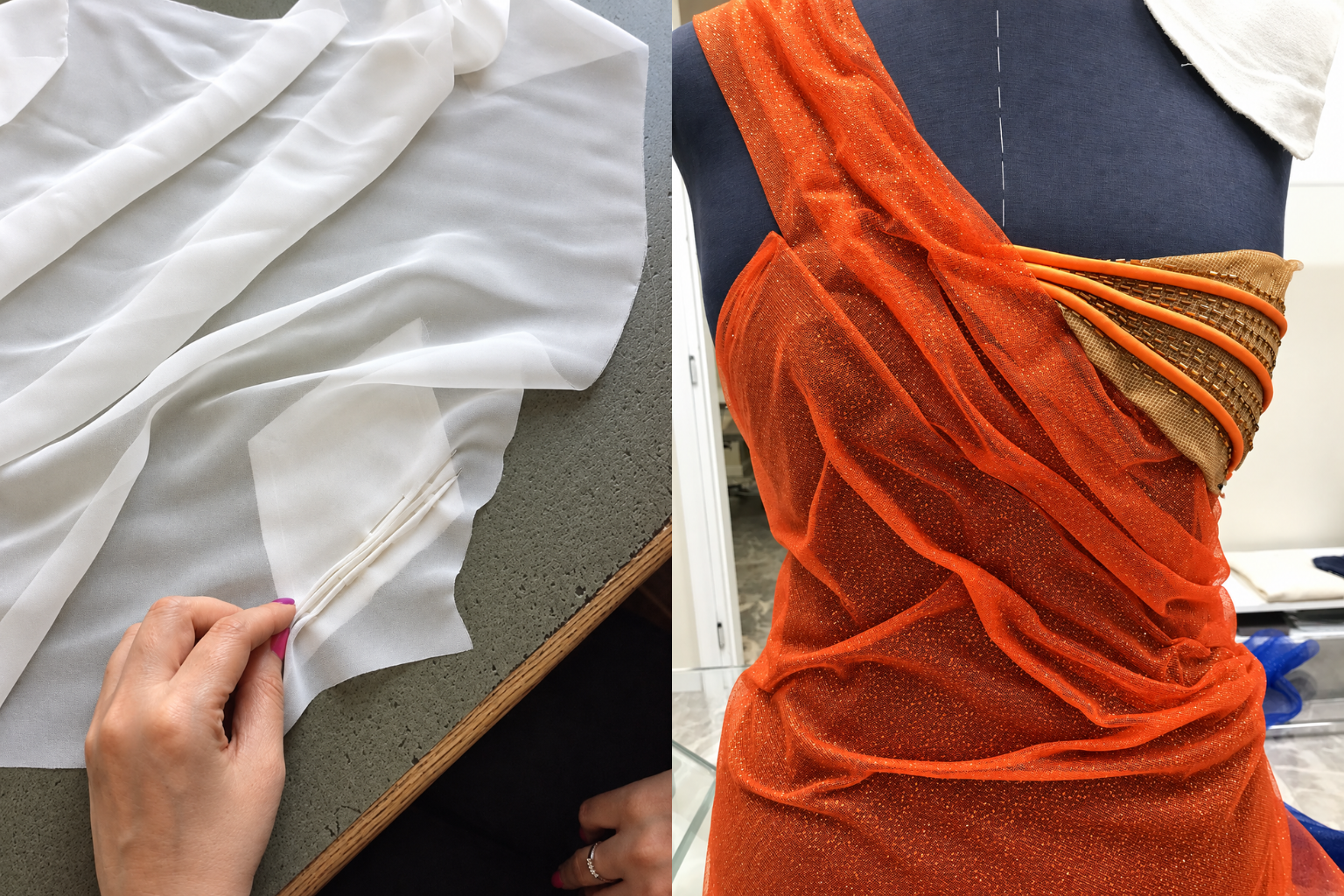
A tailoring session introduces participants to basic hand stitches and simple embroidery techniques, putting needle, thread and fabric directly into their hands. Draping shifts the focus towards shape and construction: working on a mannequin, guests learn how fabric can be pinned, folded and manipulated to create a small garment.
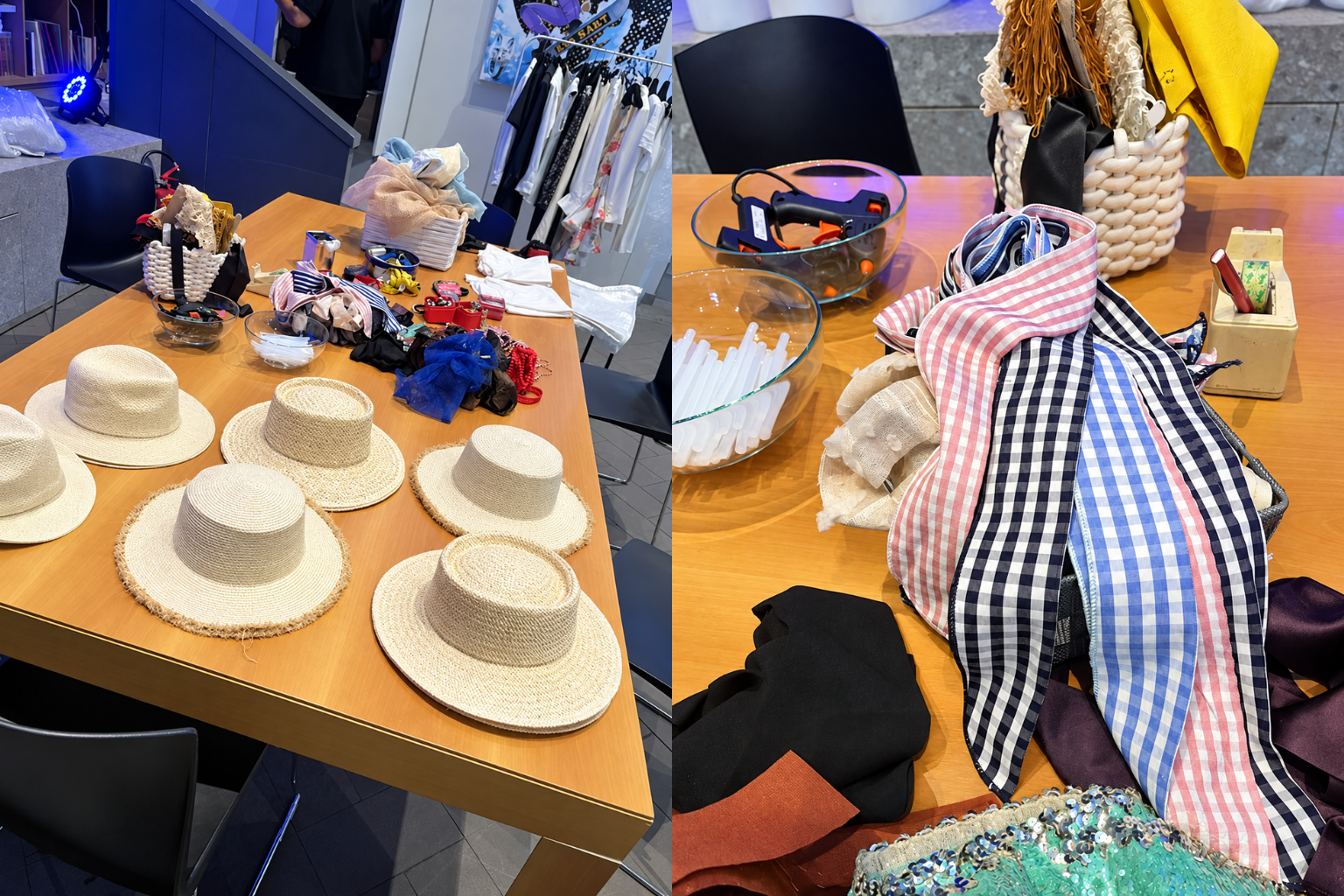
A millinery session, meanwhile, explores a distinct aspect of the craft through the decoration and customisation of hats. The techniques change, but the principle remains the same. People handle the materials, test unfamiliar movements, make choices and see an object gradually emerge from the process.
Under the guidance of professionals, even those who have never picked up a needle can take part. Technical perfection is not the point. Curiosity, experimentation and the satisfaction of making something with your own hands are.
Teamwork, stitch by stitch
This practical dimension is also what allows tailoring to work particularly well as a corporate activity. The format can accommodate intimate teams as well as much larger groups, up to around 100 participants.
Draping, in particular, lends itself naturally to teamwork. One person may come up with the concept, another may intuitively understand how to manipulate the material, while someone else finds a solution. The exercise becomes less about sewing ability and more about the process behind the result: discussing, trying, adjusting and combining complementary contributions around a shared objective.
The final creations can also become part of a friendly challenge. Teams present their designs, vote and select a winning piece. The competitive element remains light; what matters is giving the group a common finish line and a chance to see how differently the same task can be interpreted.
Fashion, from the very start
The setting itself plays an important role in how the experience unfolds.
Set in one of Milan’s historic creative districts, the activity places participants in direct contact with a craft deeply rooted in the city’s identity. It can also take place inside a historic Milanese space, adding another layer to the sense of discovery beyond the better-known façades and fashion districts.
This is where the Made in Italy connection becomes particularly meaningful, as it is no longer an abstract idea associated with a label or a finished product. People gain an appreciation of the time, skill and judgement behind an object made by hand — and understand why details that may look effortless are anything but.
A closer look, earned by doing
The workshop can also become one part of a broader MICE programme. One option is to follow the hands-on activity with a private fashion show. After having worked with fabrics, stitches and construction themselves, guests observe professionally made garments with a different eye: noticing the drape of a material, the precision of a finish or the hours of work hidden behind a detail they might previously have overlooked. A cocktail can extend the occasion further, turning the transition from workshop to show into a relaxed social moment. And in Milan, perhaps the most interesting way to approach fashion is not only to see what has been made — but to understand, for a few hours, what it takes to make it.
Related articles


italyscape@italyscape.com
+39 011 2293208
Lungo Dora Pietro Colletta, 75,
10154
Torino (TO)
10154
Torino (TO)